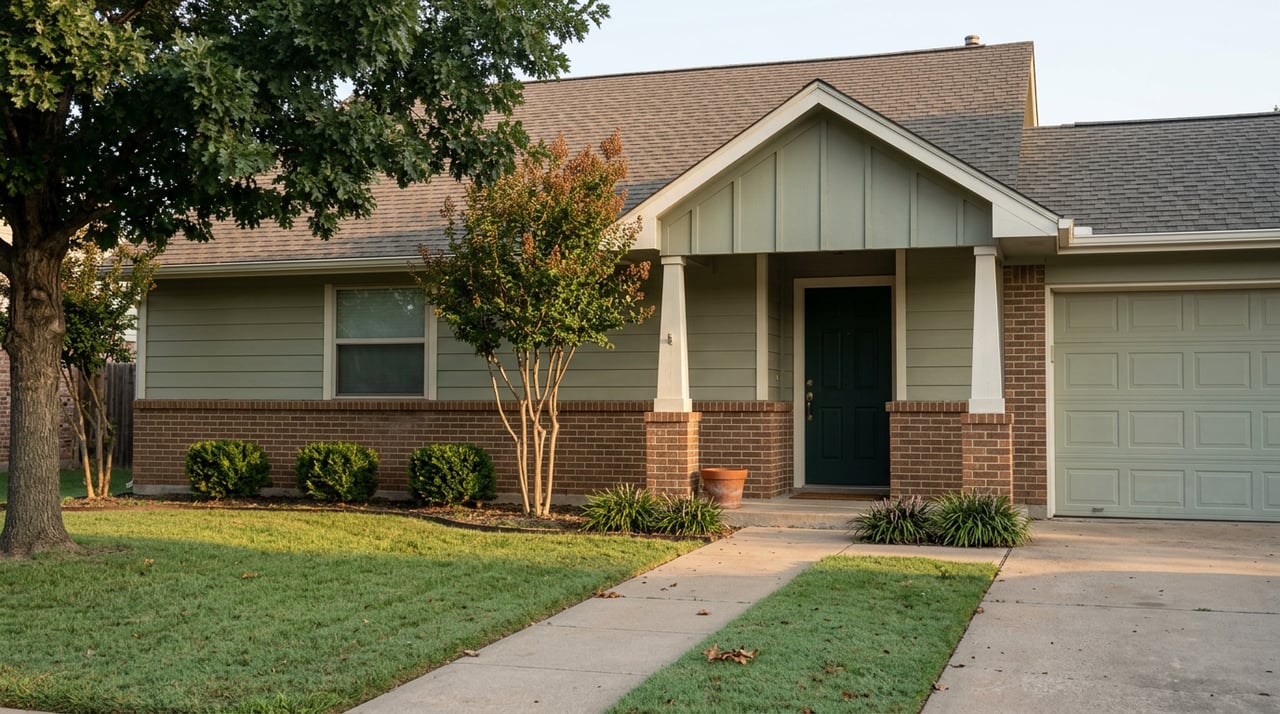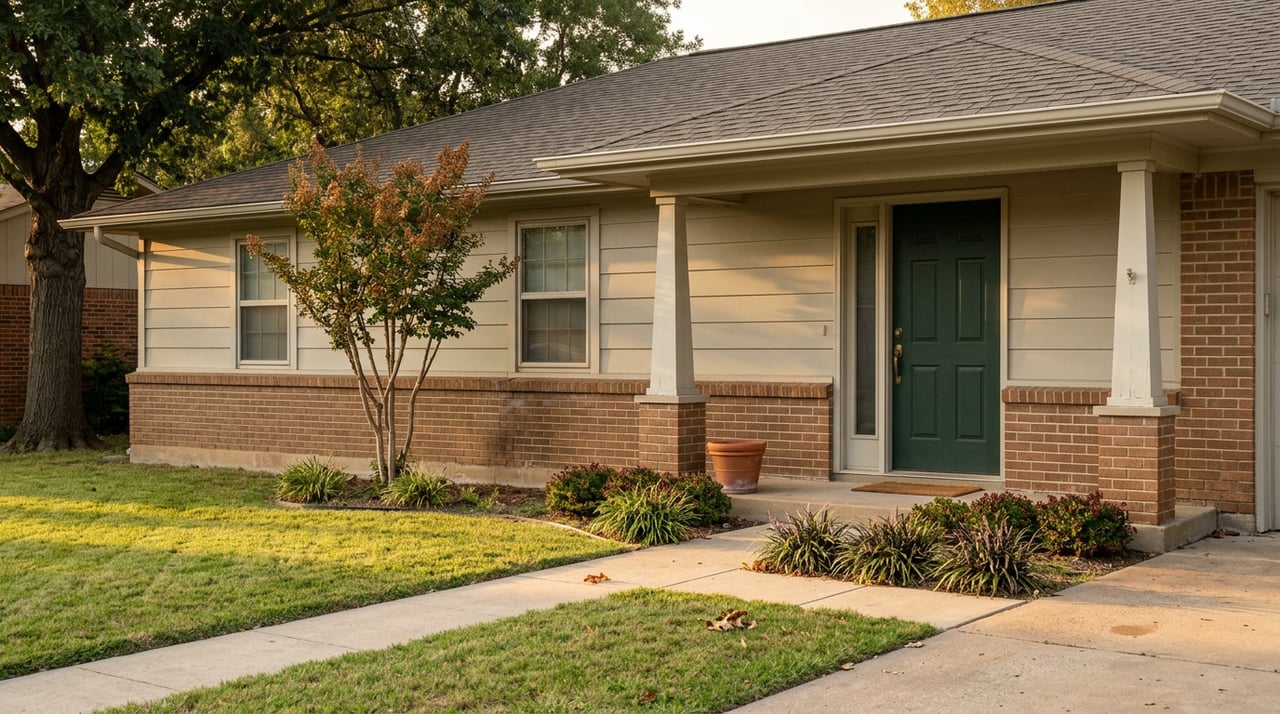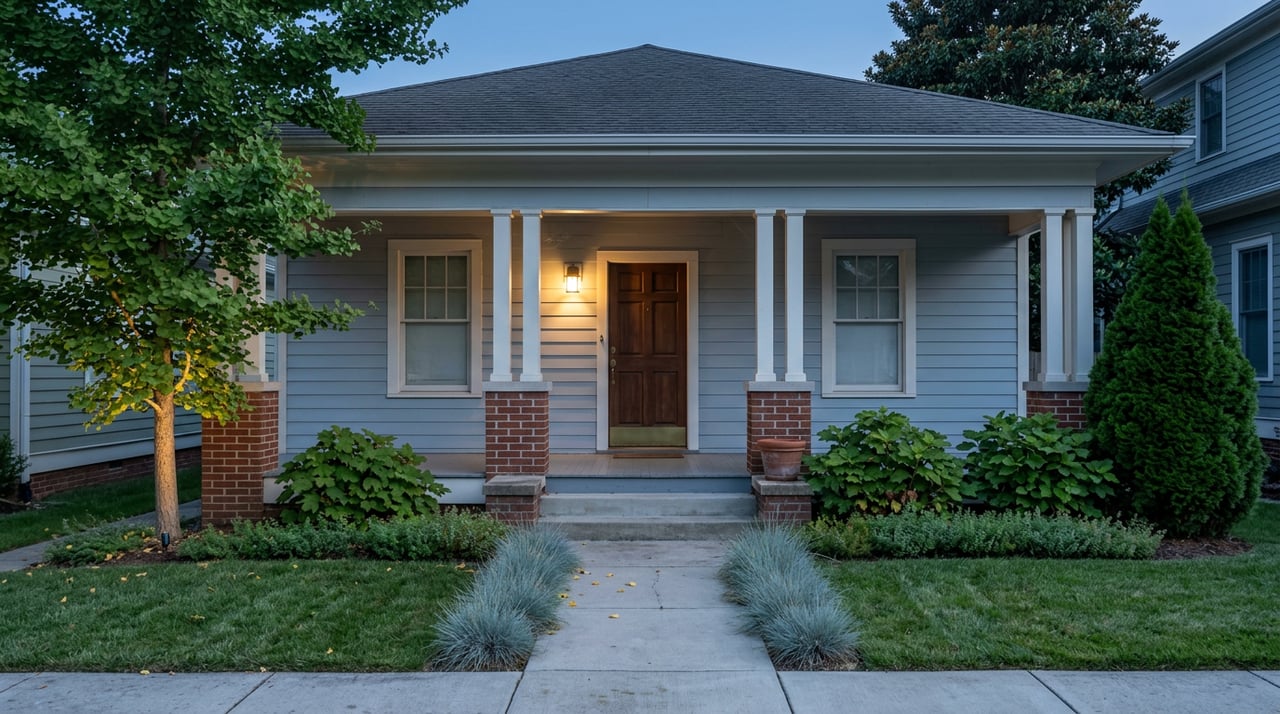
A two-unit property on Willow Street went on the market in North Little Rock earlier this year with a line in the listing that would read as an obvious plus almost anywhere else in the city: new vinyl siding, energy-efficient vinyl windows. It was pitched as a house-hack investment, a main house paired with a detached accessory unit, both carrying long-term tenants and steady rental income. On paper it's a tidy setup, the kind of listing an investor scrolls past twice before circling back.
What the listing doesn't mention is that Willow Street sits inside the Argenta Historic District, and inside that boundary, vinyl siding and vinyl windows are exactly the category of upgrade the North Little Rock Historic District Commission was created to scrutinize. Whether those particular replacements were ever reviewed isn't something a buyer can tell from photos. That's the gap this post is about: what reads as a finished renovation in a listing description and what the commission actually signed off on can be two different things, and the difference doesn't surface until you're already past inspection.
One District, Two Distinct Sections
The Argenta Historic District covers roughly the area bounded by Broadway on the south, 9th Street on the north, Poplar Street on the east, and North Broadway on the west, encompassing 258 residential and commercial properties dating from the late 1880s through the 1940s. It's not one uniform streetscape. The commercial core runs along a few blocks of Main Street, anchored by structures like City Hall and the former U.S. Post Office. Three blocks west, the residential section centers on Willow Street running from 4th to Melrose Circle, where fifty-two Craftsman bungalows were built by Twin City Bank and the Justin Matthews Company in the 1920s on the site of a former cotton oil mill. Shotgun-style houses still line the 500 block of Willow and the 800 block of Orange, built originally for the railroad workers who gave Argenta its working-class character.
The point isn't the architectural trivia. It's that a buyer looking at a modest 1920s bungalow near Melrose Circle and a buyer looking at a storefront on Main Street are both subject to the same review body, even though the properties look nothing alike and serve completely different purposes.
What Actually Triggers a Review
The commission's own guidance is specific about scope: most alterations to a structure's exterior require review, including room additions, doors, windows, awnings, porches, and signage. New construction and demolition go through the same process. Interior work doesn't trigger it. Neither does routine maintenance that doesn't change the exterior appearance, though the line between maintenance and alteration is exactly the kind of judgment call that turns into a phone call to the commission before you turn it into a change order with your contractor.
This is where the Willow Street listing becomes instructive rather than incidental. Vinyl replacement windows and vinyl siding are common, inexpensive upgrades on a rental property anywhere in Central Arkansas. Inside a National Register historic district, window and siding material is precisely the kind of exterior change the commission was set up to weigh, because material choice is a large part of what keeps a 1920s bungalow reading as a 1920s bungalow instead of a generic remodel. Whether that specific property secured a Certificate of Appropriateness before the work was done isn't disclosed in the listing, and there's no way for a buyer to know from the outside whether they're purchasing a compliant renovation or inheriting an open question.
The Two Approvals, Not One
Renovating inside the district means clearing two separate gates, not one.
| Step | What Happens |
|---|---|
| COA application | Property owner submits plans to the Historic District Commission for review |
| Public notice | A hearing notice runs in the newspaper two weeks ahead of the review date, and adjacent property owners are notified directly |
| Public hearing | The commission reviews the proposal at its public meeting, held the second Thursday of each month at 506 Main Street |
| Certificate issued | If approved, the property owner receives a Certificate of Appropriateness |
| Building permit | Only after the COA is in hand can the owner apply for the actual construction permit from the city's Planning Department |
A standard renovation elsewhere in North Little Rock skips straight to that last step. Inside Argenta, it's the last step, not the first.
If the commission denies an application, the applicant's recourse is an appeal to the Circuit Court of Pulaski County, which is a meaningfully higher bar than asking a city inspector to reconsider. That single fact should reframe how a buyer thinks about any renovation plan they're building into their offer. A contractor's bid and timeline assumes a permit is a formality. In Argenta, the permit is downstream of a public hearing that only happens twelve times a year.
What This Does to a Renovate-Before-List Plan
The renovate-then-sell playbook that works in most of Little Rock's suburban corridors runs into a specific timing problem here. If a seller wants to replace windows or add a porch before listing, they need to file with the commission, wait through the two-week public notice window, get a slot at the next monthly meeting, and only then pull the building permit that lets the actual work begin. Miss the cutoff for one month's agenda and the whole plan slides a full cycle.
That timing pressure lands on top of a market that's already moving slower than it was. Over the three months ending May 2026, North Little Rock homes sold after an average of 70 days on market, compared to 54 days over the same window a year earlier, according to Redfin's tracking of the city. The median sale price over that same three-month stretch was $202,000, up 6.4 percent year over year, with 231 homes sold in May 2026 versus 227 the year before. Prices are still climbing and volume is holding, but the extra sixteen days on market is the part that matters here: a seller who loses a month to the COA calendar before they can even start a renovation is compounding a market that's already taking longer to close, not working against a fast one.
For a buyer, the practical takeaway is different but related. If part of what made an offer attractive was a renovation plan, that plan needs a commission-approval contingency built into the timeline, not just a contractor's estimate. And if a home is being marketed with recent exterior upgrades already completed, it's worth asking directly whether those upgrades went through the COA process. If they didn't, the next owner inherits that unresolved status, not the seller.
Frequently Asked Questions
Does the Historic District Commission review interior renovations? No. Review is limited to exterior changes, including doors, windows, siding, additions, awnings, signage, and any new construction or demolition. Interior remodeling doesn't require a Certificate of Appropriateness.
What happens if exterior work was done without a COA? The commission's process exists specifically to catch this before permits are issued, since the building permit for exterior construction isn't supposed to be granted until the COA is in hand. A buyer who suspects unauthorized work was done should raise it directly with the seller and, if needed, confirm status with the city before closing.
How often can a project actually get reviewed? The commission meets monthly, on the second Thursday, at 506 Main Street. Combined with the two-week public notice requirement, that means a project's timeline is built around a fixed monthly calendar, not a rolling permit office.
Does this apply to the whole district or just the residential streets? It applies district-wide, covering both the Main Street commercial section and the Willow Street and Melrose Circle residential area, along with adjoining blocks inside the boundary.
If you're weighing a historic property in Argenta, whether you're the one selling a home you've already restored or the one trying to figure out what a listing's renovation claims actually mean, this is exactly the kind of local detail that changes a timeline and a budget. Capital SIR works these transactions inside Central Arkansas's historic districts regularly and can walk through what a specific property's COA history looks like before you write an offer or set a list date. Schedule a complimentary market consultation to talk through it.