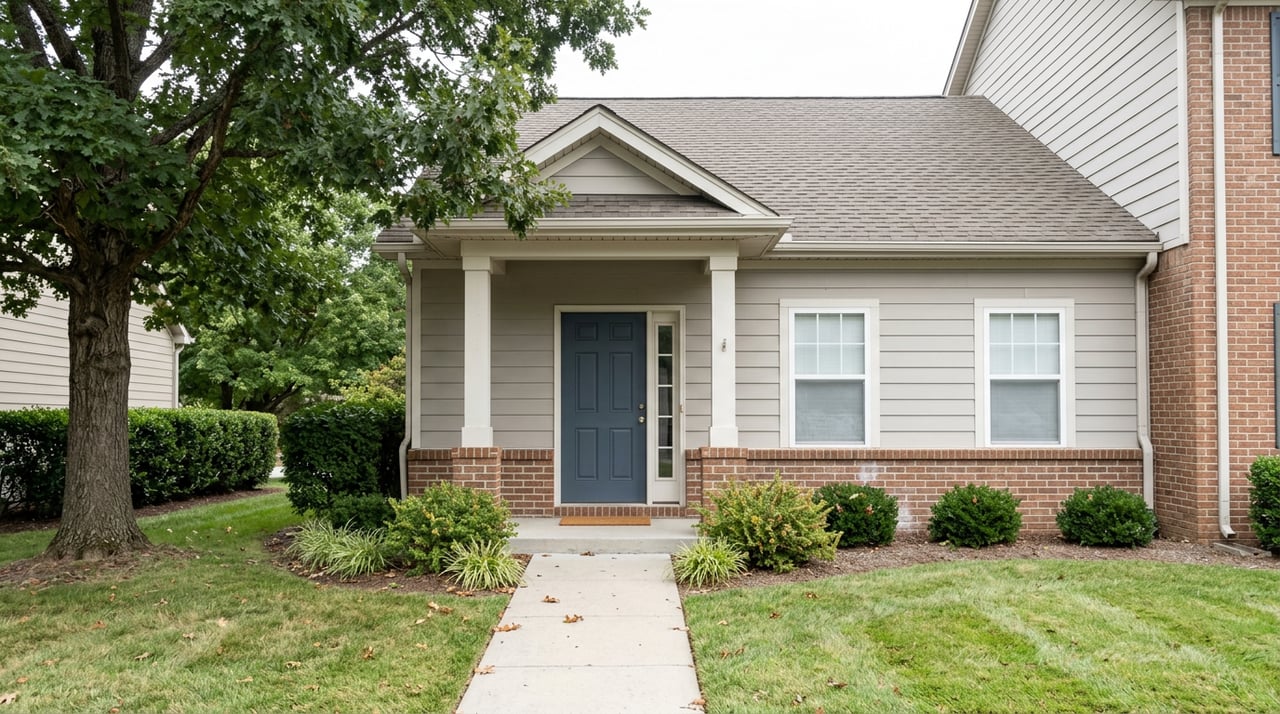
Two weeks before closing on a home in Maumelle, a buyer's title company sends over a document neither the buyer nor their out-of-state lender has ever seen: an estoppel letter. It's a one-page statement from a property owners association confirming exactly what the seller owes in dues and whether any of that balance is past due. Nobody budgeted for it. Nobody mentioned it during the walkthrough. In Arkansas, that letter typically runs $200 to $500.
This surprises people in Maumelle more often than it does almost anywhere else in Central Arkansas, and the reason has nothing to do with bad luck. It has to do with how the city was built.
The City Was Never Built Lot by Lot
In 1967, Arkansas businessman Jess Odom bought roughly 5,000 acres northwest of Little Rock and set out to build something the region hadn't seen before: a fully planned town, backed by $45 million in federal assistance from the U.S. Department of Housing and Urban Development. Maumelle became one of only thirteen federally supported "new towns" built across the country during that era. The first family moved in by the spring of 1974, and the city incorporated in 1985, according to the Encyclopedia of Arkansas and the city's own history page.
That history matters for a specific reason. When a city grows organically, one subdivision at a time over decades, whether a given home carries an association is often just a matter of when and how that particular pocket got platted. When a city is built from a single master plan, the covenants get written into the original Bill of Assurance for entire sections at once. In Maumelle, the property owners association isn't something bolted onto a neighborhood after the fact. It's part of the foundation the city was poured on.
Why "No HOA" Barely Narrows the List
"No HOA" is one of the most common filters buyers type into a home search anywhere in Central Arkansas, and it makes sense on the surface. Nobody wants a mystery monthly bill or a board with opinions about their fence. But in a city built the way Maumelle was, that filter answers a much smaller question than most buyers think it does. A large share of homes here belong to some kind of association whether a buyer searches for it or not.
The question that actually predicts what you'll pay isn't "does this home have an association." It's "what kind." In Maumelle, that answer splits into two genuinely different worlds.
| Association | Annual Dues | What They Cover |
|---|---|---|
| Maumelle Valley Estates POA (Cypress Valley, Maumelle Valley, and Summit Ridge, nearly 800 homes) | $150 per lot | Trail and bridge upkeep, common-area lighting and utilities, insurance, signage and landscaping |
| Country Club of Arkansas POA | $120 for 2026, plus a $10 late fee after March 31 | Shared community upkeep |
| MHPOA (Maumelle Heights and Turtle Creek) | $150 per year | Shared community upkeep |
| Condo and townhome associations, including communities near Lake Willastein such as Walton Heights-Candlewood and River Mountain | Typically billed monthly, often several hundred dollars | Building exteriors, roofs, shared structures, and amenities like a pool or clubhouse |
For scale, the median HOA fee across Arkansas runs only about $47 a month statewide, one of the lowest in the country, largely because so many Arkansas associations cover single-family subdivisions rather than buildings full of shared roofs and walls. Nationally, comparable townhome associations commonly run $200 to $400 a month and condo associations $600 to $900, though the exact figure for any single Maumelle property still has to be confirmed against its own governing documents. The gap between the top three rows of that table and the fourth isn't a rounding error. It's the difference between a bill you barely notice once a year and one that lands in your monthly budget every month you own the home.
Why This Changes How You Should Read the Median
This split also explains something that looks like a contradiction the moment you set two numbers side by side. Single-family homes in Maumelle sold for a median price of $292,900 in June 2026, a month when 199 homes changed hands compared to 154 the year before. Condo listings in the city are carrying a median asking price around $232,000 this August, well under that single-family figure. Neither number is wrong. They're measuring different product types.
A city where a $150-a-year single-family POA and a several-hundred-dollar-a-month condo association both count as "has an HOA" is a city where the citywide median swings with the mix of what sold or is listed that month, not just with appreciation. When more condos trade in a given month, the citywide median drops even if no individual home lost value. When more single-family lots close, it rises. The "no HOA" filter and the median price are both trying to simplify a market with two genuinely different cost structures sitting inside it, and both end up hiding more than they reveal.
What the Dues Actually Buy
The Maumelle Valley Estates POA, one of the largest single-family associations in the city, spends its $150-per-lot annual assessment on trail and bridge maintenance, common-area lighting, insurance, and landscaping and signage repairs across Cypress Valley, Maumelle Valley, and Summit Ridge. That's a light touch for what it delivers: a subdivision that stays presentable without asking any one homeowner to personally maintain a shared trail or bridge.
Condo and townhome associations near amenities like Lake Willastein Park, which offers hiking and biking paths, fishing spots, playgrounds, and even a few historical World War II bunkers left over from the site's earlier use, are paying for something structurally different. Those dues typically fund roof replacement, exterior painting, and building-wide repairs the way a single-family POA never touches, plus the clubhouse and pool access that come standard with that product type. A higher monthly bill isn't automatically a red flag. It's often the price of not personally owning a roof.
The Part That Shows Up at Closing
Arkansas law gives these associations real enforcement power, and it's worth understanding before you're the one signing at the closing table.
None of this makes an association a liability. The same covenants that come with a fee are usually what keep a subdivision's landscaping consistent and its resale value protected. The mistake isn't buying into an association. It's assuming that because "no HOA" returned a list of results, you've actually screened for cost.
Does every home in Maumelle belong to an association?
Not every one, but a large share do, given how much of the city was platted as part of the original master plan. The only way to know for certain is to check the specific property's governing documents before writing an offer.
What happens if a seller has unpaid dues at closing?
An estoppel letter, typically $200 to $500 in Arkansas, discloses the exact balance owed.
Is a single-family POA fee a good predictor of what a condo association charges?
No. A single-family POA in Maumelle generally funds shared outdoor infrastructure like trails and lighting, while a condo or townhome association funds the building itself. The two figures aren't comparable even within the same city.
If you're comparing what a home in Maumelle actually costs to own against a similar search in Chenal Valley or Conway, the sticker price and the "no HOA" filter are only two of the numbers that matter. Capital SIR can walk you through a specific property's governing documents, dues history, and what they actually fund before you write an offer. Schedule a complimentary market consultation.
This article is general information, not legal, tax or financial advice. Consult a qualified professional about your situation.